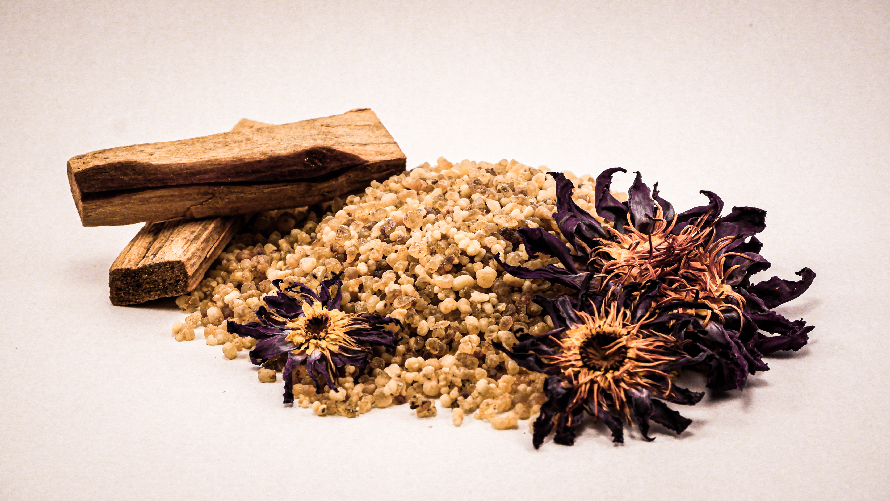
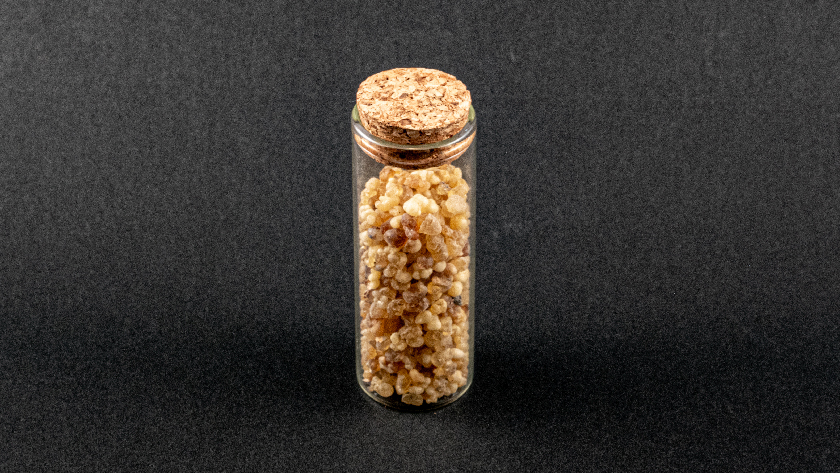
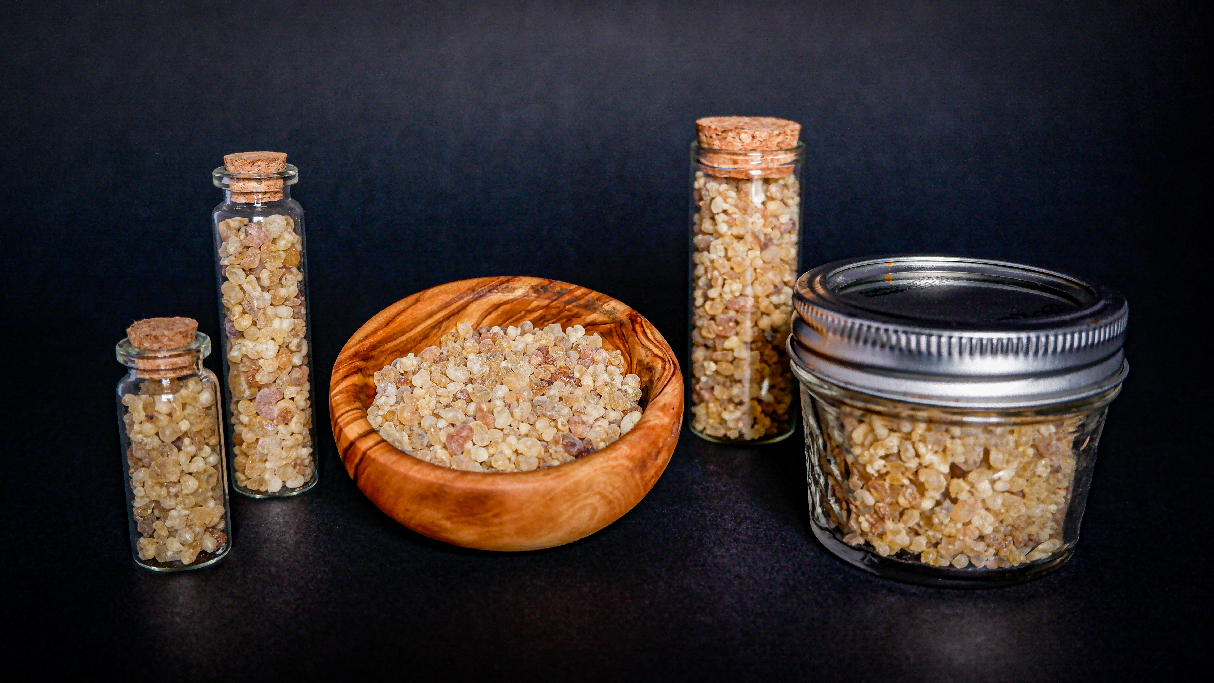
Frankincense (Boswellia serrata and Boswellia Papyrifera) Probably best known because of the Nativity story, Frankincense - derived from the resin of a tree called Boswellia serrata and other species of the same - has an interesting history. In Hebrew, its name is Levonah, meaning "white;" in Arabic, a closely-related language, it is 'al-Luban, a term referring to milk; the name of the modern country of Lebanon is derived from both. However, it came to be known as "frankincense" when crusaders - many of whom were French or "Frankish" - introduced it to Europe during the Middle Ages. Dried frankincense is used in numerous ways, including perfume and aromatherapy; ancient Egyptians used burnt powdered frankincense as eyeliner. The burning of the dried c/s Boswellia Serrata resin has also played a part in the religious rites of all three Abrahamic traditions. Frankincense is thought to be non-toxic, but when using natural herbs for therapeutic purposes - even organic herbs - prudence and caution are fortuitous.